viernes, 7 de junio de 2013

Final Task

     You have already read five stories from "The Grimm's Fairy Tales" from the Grimms brothers, comparing and analyzing them, now is time for you to create a story by yourself, let's fin out how, shall we?

     All the stories read up to now have characters, a narrative and a story to be told and heard, not much information to be given but lots of details. Our mind is full of details, everyday we tell others our secrets and dreams, and guess what, they are told full of details, so now is time for us to tell a story by our own.

      You will have to write a story of 350 words as a minimun that will have characters, a beggining, a develpment and a closing. The topic will be of your like as long as it helps you to carry on the story.

     How is this story going to be evaluated? I have an answer for that, with a rubric full of details for you to follow and not getting lost in the process, this task will be carry out within the month so it is time for you to start creating your story, GO FOR IT!!!

     This is the rubric we are going to use to evaluate your stories:


     All the stories have been taken from "East of the Web" webpage so if more information is needed you can click on the link and it will redirect you right to its webpage.

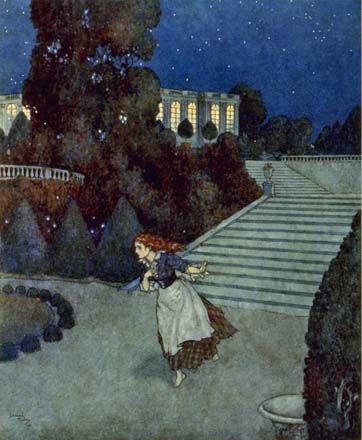
Cinderella's Task

     You are about to read Cinderella's story from "The Grimm's Fairy Tales", this is the original story written in 1857 by the Grimms brothers. The task for you consists of make an analysis of the characters of the tale and what they stand for in our society nowadays. Compare answeres with your classmates.
ENJOY IT!!!

__________________________________________________

CINDERELLA
     A rich man's wife became sick, and when she felt that her end was drawing near, she called her only daughter to her bedside and said, "Dear child, remain pious and good, and then our dear God will always protect you, and I will look down on you from heaven and be near you." With this she closed her eyes and died.

     The girl went out to her mother's grave every day and wept, and she remained pious and good. When winter came the snow spread a white cloth over the grave, and when the spring sun had removed it again, the man took himself another wife.

     This wife brought two daughters into the house with her. They were beautiful, with fair faces, but evil and dark hearts. Times soon grew very bad for the poor stepchild.

     "Why should that stupid goose sit in the parlor with us?" they said. "If she wants to eat bread, then she will have to earn it. Out with this kitchen maid!"

     They took her beautiful clothes away from her, dressed her in an old gray smock, and gave her wooden shoes. "Just look at the proud princess! How decked out she is!" they shouted and laughed as they led her into the kitchen.

     There she had to do hard work from morning until evening, get up before daybreak, carry water, make the fires, cook, and wash. Besides this, the sisters did everything imaginable to hurt her. They made fun of her, scattered peas and lentils into the ashes for her, so that she had to sit and pick them out again. In the evening when she had worked herself weary, there was no bed for her. Instead she had to sleep by the hearth in the ashes. And because she always looked dusty and dirty, they called her Cinderella.
One day it happened that the father was going to the fair, and he asked his two stepdaughters what he should bring back for them.

     "Beautiful dresses," said the one.

     "Pearls and jewels," said the other.

     "And you, Cinderella," he said, "what do you want?"

     "Father, break off for me the first twig that brushes against your hat on your way home."

     So he bought beautiful dresses, pearls, and jewels for his two stepdaughters. On his way home, as he was riding through a green thicket, a hazel twig brushed against him and knocked off his hat. Then he broke off the twig and took it with him. Arriving home, he gave his stepdaughters the things that they had asked for, and he gave Cinderella the twig from the hazel bush.

     Cinderella thanked him, went to her mother's grave, and planted the branch on it, and she wept so much that her tears fell upon it and watered it. It grew and became a beautiful tree.
Cinderella went to this tree three times every day, and beneath it she wept and prayed. A white bird came to the tree every time, and whenever she expressed a wish, the bird would throw down to her what she had wished for.

     Now it happened that the king proclaimed a festival that was to last three days. All the beautiful young girls in the land were invited, so that his son could select a bride for himself. When the two stepsisters heard that they too had been invited, they were in high spirits.
They called Cinderella, saying, "Comb our hair for us. Brush our shoes and fasten our buckles. We are going to the festival at the king's castle."

     Cinderella obeyed, but wept, because she too would have liked to go to the dance with them. She begged her stepmother to allow her to go.
      "You, Cinderella?" she said. "You, all covered with dust and dirt, and you want to go to the festival?. You have neither clothes nor shoes, and yet you want to dance!"

     However, because Cinderella kept asking, the stepmother finally said, "I have scattered a bowl of lentils into the ashes for you. If you can pick them out again in two hours, then you may go with us."

     The girl went through the back door into the garden, and called out, "You tame pigeons, you turtledoves, and all you birds beneath the sky, come and help me to gather the good ones go into the pot, the bad ones go into your crop."

     Two white pigeons came in through the kitchen window, and then the turtledoves, and finally all the birds beneath the sky came whirring and swarming in, and lit around the ashes. The pigeons nodded their heads and began to pick, pick, pick, pick. And the others also began to pick, pick, pick, pick. They gathered all the good grains into the bowl. Hardly one hour had passed before they were finished, and they all flew out again.

      The girl took the bowl to her stepmother, and was happy, thinking that now she would be allowed to go to the festival with them.

      But the stepmother said, "No, Cinderella, you have no clothes, and you don't know how to dance. Everyone would only laugh at you."

      Cinderella began to cry, and then the stepmother said, "You may go if you are able to pick two bowls of lentils out of the ashes for me in one hour," thinking to herself, "She will never be able to do that."

     The girl went through the back door into the garden, and called out, "You tame pigeons, you turtledoves, and all you birds beneath the sky, come and help me to gather: the good ones go into the pot, the bad ones go into your crop."

     Two white pigeons came in through the kitchen window, and then the turtledoves, and finally all the birds beneath the sky came whirring and swarming in, and lit around the ashes. The pigeons nodded their heads and began to pick, pick, pick, pick. And the others also began to pick, pick, pick, pick. They gathered all the good grains into the bowls. Before a half hour had passed they were finished, and they all flew out again.

     The girl took the bowls to her stepmother, and was happy, thinking that now she would be allowed to go to the festival with them.

     But the stepmother said, "It's no use. You are not coming with us, for you have no clothes, and you don't know how to dance. We would be ashamed of you." With this she turned her back on Cinderella, and hurried away with her two proud daughters.

     Now that no one else was at home, Cinderella went to her mother's grave beneath the hazel tree, and cried out: shake and quiver, little tree, throw gold and silver down to me.

     Then the bird threw a gold and silver dress down to her, and slippers embroidered with silk and silver. She quickly put on the dress and went to the festival.

Her stepsisters and her stepmother did not recognize her. They thought she must be a foreign princess, for she looked so beautiful in the golden dress. They never once thought it was Cinderella, for they thought that she was sitting at home in the dirt, looking for lentils in the ashes.

     The prince approached her, took her by the hand, and danced with her. Furthermore, he would dance with no one else. He never let go of her hand, and whenever anyone else came and asked her to dance, he would say, "She is my dance partner."

     She danced until evening, and then she wanted to go home. But the prince said, "I will go along and escort you," for he wanted to see to whom the beautiful girl belonged. However, she eluded him and jumped into the pigeon coop. The prince waited until her father came, and then he told him that the unknown girl had jumped into the pigeon coop.

     The old man thought, "Could it be Cinderella?"

     He had them bring him an ax and a pick so that he could break the pigeon coop apart, but no one was inside. When they got home Cinderella was lying in the ashes, dressed in her dirty clothes. A dim little oil-lamp was burning in the fireplace. Cinderella had quickly jumped down from the back of the pigeon coop and had run to the hazel tree. There she had taken off her beautiful clothes and laid them on the grave, and the bird had taken them away again. Then, dressed in her gray smock, she had returned to the ashes in the kitchen.

     The next day when the festival began anew, and her parents and her stepsisters had gone again, Cinderella went to the hazel tree and said: shake and quiver, little tree, throw gold and silver down to me. Then the bird threw down an even more magnificent dress than on the preceding day. When Cinderella appeared at the festival in this dress, everyone was astonished at her beauty. The prince had waited until she came, then immediately took her by the hand, and danced only with her. When others came and asked her to dance with them, he said, "She is my dance partner."

     When evening came she wanted to leave, and the prince followed her, wanting to see into which house she went. But she ran away from him and into the garden behind the house. A beautiful tall tree stood there, on which hung the most magnificent pears. She climbed as nimbly as a squirrel into the branches, and the prince did not know where she had gone. He waited until her father came, then said to him, "The unknown girl has eluded me, and I believe she has climbed up the pear tree.

     The father thought, "Could it be Cinderella?" He had an ax brought to him and cut down the tree, but no one was in it. When they came to the kitchen, Cinderella was lying there in the ashes as usual, for she had jumped down from the other side of the tree, had taken the beautiful dress back to the bird in the hazel tree, and had put on her gray smock.
On the third day, when her parents and sisters had gone away, Cinderella went again to her mother's grave and said to the tree:
Shake and quiver, little tree,
Throw gold and silver down to me.
     This time the bird threw down to her a dress that was more splendid and magnificent than any she had yet had, and the slippers were of pure gold. When she arrived at the festival in this dress, everyone was so astonished that they did not know what to say. The prince danced only with her, and whenever anyone else asked her to dance, he would say, "She is my dance partner."

      When evening came Cinderella wanted to leave, and the prince tried to escort her, but she ran away from him so quickly that he could not follow her. The prince, however, had set a trap. He had had the entire stairway smeared with pitch. When she ran down the stairs, her left slipper stuck in the pitch. The prince picked it up. It was small and dainty, and of pure gold.

      The next morning, he went with it to the man, and said to him, "No one shall be my wife except for the one whose foot fits this golden shoe."

     The two sisters were happy to hear this, for they had pretty feet. With her mother standing by, the older one took the shoe into her bedroom to try it on. She could not get her big toe into it, for the shoe was too small for her. Then her mother gave her a knife and said, "Cut off your toe. When you are queen you will no longer have to go on foot."

     The girl cut off her toe, forced her foot into the shoe, swallowed the pain, and went out to the prince. He took her on his horse as his bride and rode away with her. However, they had to ride past the grave, and there, on the hazel tree, sat the two pigeons, crying out:
Rook di goo, rook di goo!
There's blood in the shoe.
The shoe is too tight,
This bride is not right!
     Then he looked at her foot and saw how the blood was running from it. He turned his horse around and took the false bride home again, saying that she was not the right one, and that the other sister should try on the shoe. She went into her bedroom, and got her toes into the shoe all right, but her heel was too large.

     Then her mother gave her a knife, and said, "Cut a piece off your heel. When you are queen you will no longer have to go on foot."

     The girl cut a piece off her heel, forced her foot into the shoe, swallowed the pain, and went out to the prince. He took her on his horse as his bride and rode away with her. When they passed the hazel tree, the two pigeons were sitting in it, and they cried out:
Rook di goo, rook di goo!
There's blood in the shoe.
The shoe is too tight,
This bride is not right!
     He looked down at her foot and saw how the blood was running out of her shoe, and how it had stained her white stocking all red. Then he turned his horse around and took the false bride home again.

     "This is not the right one, either," he said. "Don't you have another daughter?"

     "No," said the man. "There is only a deformed little Cinderella from my first wife, but she cannot possibly be the bride."

     The prince told him to send her to him, but the mother answered, "Oh, no, she is much too dirty. She cannot be seen."

     But the prince insisted on it, and they had to call Cinderella. She first washed her hands and face clean, and then went and bowed down before the prince, who gave her the golden shoe. She sat down on a stool, pulled her foot out of the heavy wooden shoe, and put it into the slipper, and it fitted her perfectly.

When she stood up the prince looked into her face, and he recognized the beautiful girl who had danced with him. He cried out, "She is my true bride."

     The stepmother and the two sisters were horrified and turned pale with anger. The prince, however, took Cinderella onto his horse and rode away with her. As they passed by the hazel tree, the two white pigeons cried out:
Rook di goo, rook di goo!
No blood's in the shoe.
The shoe's not too tight,
This bride is right!
     After they had cried this out, they both flew down and lit on Cinderella's shoulders, one on the right, the other on the left, and remained sitting there.

     When the wedding with the prince was to be held, the two false sisters came, wanting to gain favor with Cinderella and to share her good fortune. When the bridal couple walked into the church, the older sister walked on their right side and the younger on their left side, and the pigeons pecked out one eye from each of them. Afterwards, as they came out of the church, the older one was on the left side, and the younger one on the right side, and then the pigeons pecked out the other eye from each of them. And thus, for their wickedness and falsehood, they were punished with blindness as long as they lived.

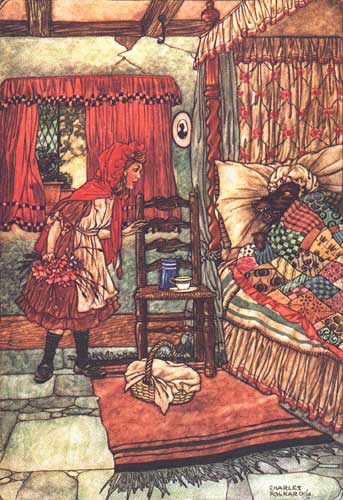
Little Red Riding Hood's Task

     You are about to read Little Red Riding Hood's story from "The Grimm's Fairy Tales", this is the original story written in 1857 by the Grimms brothers. The task for you will be to read the whole tale and write what Little Red Rding Hood should have done to prevent this situation to happen, and what you think the wolf stands for nowadays in our society.
ENJOY IT!!!

_________________________________________________


LITTLE RED RIDING HOOD

     Once upon a time there was a dear little girl who was loved by everyone who looked at her, but most of all by her grandmother, and there was nothing that she would not have given to the child. Once she gave her a little riding hood of red velvet, which suited her so well that she would never wear anything else; so she was always called 'Little Red Riding Hood.'
     One day her mother said to her: 'Come, Little Red Riding Hood, here is a piece of cake and a bottle of wine; take them to your grandmother, she is ill and weak, and they will do her good. Set out before it gets hot, and when you are going, walk nicely and quietly and do not run off the path, or you may fall and break the bottle, and then your grandmother will get nothing; and when you go into her room, don't forget to say, "Good morning", and don't peep into every corner before you do it.'
     'I will take great care,' said Little Red Riding Hood to her mother, and gave her hand on it.
     The grandmother lived out in the wood, half a league from the village, and just as Little Red Riding Hood entered the wood, a wolf met her. Red Riding Hood did not know what a wicked creature he was, and was not at all afraid of him.
     'Good day, Little Red Riding Hood,' said he.
     'Thank you kindly, wolf.'
     'Whither away so early, Little Red Riding Hood?'
     'To my grandmother's.'
     'What have you got in your apron?'
     'Cake and wine; yesterday was baking-day, so poor sick grandmother is to have something good, to make her stronger.'
     'Where does your grandmother live, Little Red Riding Hood?'
     'A good quarter of a league farther on in the wood; her house stands under the three large oak-trees, the nut-trees are just below; you surely must know it,' replied Little Red Riding Hood.
     The wolf thought to himself: 'What a tender young creature! what a nice plump mouthful - she will be better to eat than the old woman. I must act craftily, so as to catch both.'
     So he walked for a short time by the side of Little Red Riding Hood, and then he said: 'See, Little Red Riding Hood, how pretty the flowers are about here - why do you not look round? I believe, too, that you do not hear how sweetly the little birds are singing; you walk gravely along as if you were going to school, while everything else out here in the wood is merry.'
     Little Red Riding Hood raised her eyes, and when she saw the sunbeams dancing here and there through the trees, and pretty flowers growing everywhere, she thought: 'Suppose I take grandmother a fresh nosegay; that would please her too. It is so early in the day that I shall still get there in good time.'
     So she ran from the path into the wood to look for flowers. And whenever she had picked one, she fancied that she saw a still prettier one farther on, and ran after it, and so got deeper and deeper into the wood.
     Meanwhile the wolf ran straight to the grandmother's house and knocked at the door.
     'Who is there?'
     'Little Red Riding Hood,' replied the wolf. 'She is bringing cake and wine; open the door.'
     'Lift the latch,' called out the grandmother, 'I am too weak, and cannot get up.'
     The wolf lifted the latch, the door sprang open, and without saying a word he went straight to the grandmother's bed, and devoured her. Then he put on her clothes, dressed himself in her cap, laid himself in bed and drew the curtains.
     Little Red Riding Hood, however, had been running about picking flowers, and when she had gathered so many that she could carry no more, she remembered her grandmother, and set out on the way to her.
     She was surprised to find the cottage-door standing open, and when she went into the room, she had such a strange feeling that she said to herself: 'Oh dear! how uneasy I feel today, and at other times I like being with grandmother so much.' She called out: 'Good morning,' but received no answer; so she went to the bed and drew back the curtains. There lay her grandmother with her cap pulled far over her face, and looking very strange.
     'Oh! grandmother,' she said, 'what big ears you have!'
     'All the better to hear you with, my child,' was the reply.
     'But, grandmother, what big eyes you have!' she said.
     'All the better to see you with, my dear.'
     'But, grandmother, what large hands you have!'
     'All the better to hug you with.'
     'Oh! but, grandmother, what a terrible big mouth you have!'
     'All the better to eat you with!'
     And scarcely had the wolf said this, than with one bound he was out of bed and swallowed up Red Riding Hood.
     When the wolf had appeased his appetite, he lay down again in the bed, fell asleep and began to snore very loud.
     The huntsman was just passing the house, and thought to himself: 'How the old woman is snoring! I must just see if she wants anything.' So he went into the room, and when he came to the bed, he saw that the wolf was lying in it.
     'Do I find you here, you old sinner!' said he. 'I have long sought you!' But just as he was going to fire at him, it occurred to him that the wolf might have devoured the grandmother, and that she might still be saved, so he did not fire, but took a pair of scissors, and began to cut open the stomach of the sleeping wolf.
     When he had made two snips, he saw the little red riding hood shining, and then he made two snips more, and the little girl sprang out, crying: 'Ah, how frightened I have been! How dark it was inside the wolf.'
     After that the aged grandmother came out alive also, but scarcely able to breathe. Red Riding Hood, however, quickly fetched great stones with which they filled the wolf's belly, and when he awoke, he wanted to run away, but the stones were so heavy that he collapsed at once, and fell dead.
     Then all three were delighted. The huntsman drew off the wolf's skin and went home with it; the grandmother ate the cake and drank the wine which Red Riding Hood had brought, and revived. But Red Riding Hood thought to herself: 'As long as I live, I will never leave the path by myself to run into the wood, when my mother has forbidden me to do so.'
   It is also related that once, when Red Riding Hood was again taking cakes to the old grandmother, another wolf spoke to her, and tried to entice her from the path. Red Riding Hood, however, was on her guard, and went straight forward on her way, and told her grandmother that she had met the wolf, and that he had said 'good morning' to her, but with such a wicked look in his eyes, that if they had not been on the public road she was certain he would have eaten her up.
     'Well,' said the grandmother, 'we will shut the door, so that he can not come in.'
     Soon afterwards the wolf knocked, and cried: 'Open the door, grandmother, I am Little Red Riding Hood, and am bringing you some cakes.'
     But they did not speak, or open the door, so the grey-beard stole twice or thrice round the house, and at last jumped on the roof, intending to wait until Red Riding Hood went home in the evening, and then to steal after her and devour her in the darkness. But the grandmother saw what was in his thoughts.
     In front of the house was a great stone trough, so she said to the child: 'Take the pail, Red Riding Hood; I made some sausages yesterday, so carry the water in which I boiled them to the trough.'
     Red Riding Hood carried until the great trough was quite full. Then the smell of the sausages reached the wolf, and he sniffed and peeped down, and at last stretched out his neck so far that he could no longer keep his footing and began to slip, and slipped down from the roof straight into the great trough, and was drowned. But Red Riding Hood went joyously home, and no one ever did anything to harm her again.

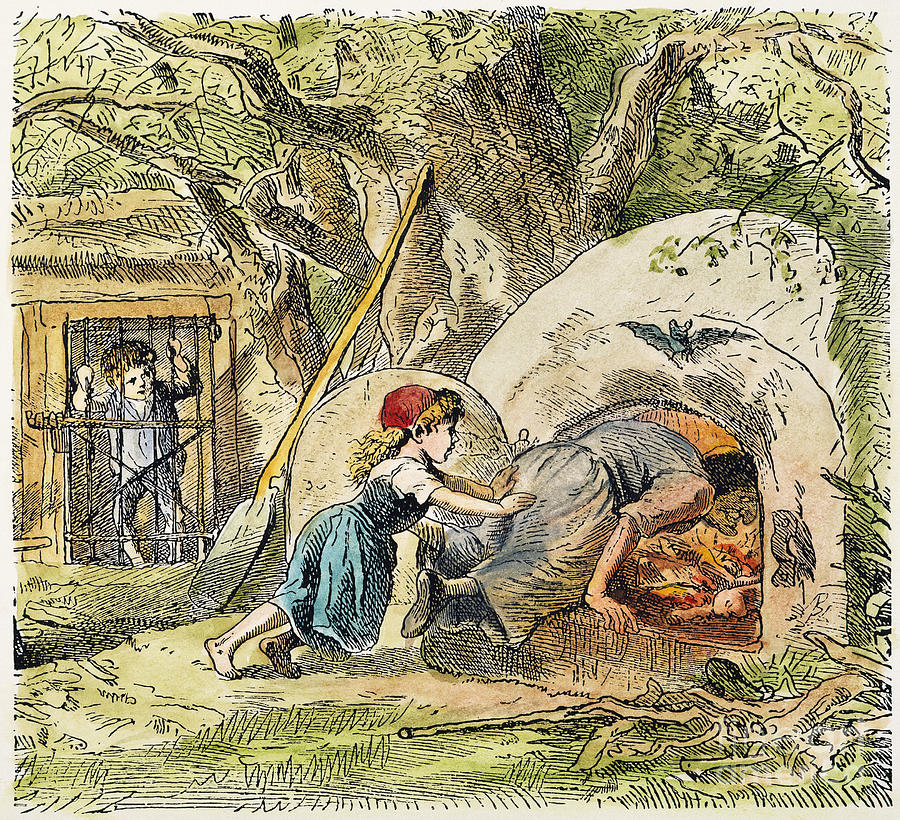
Hansel and Gretel's Task

     You are about to read Hansel and Gretel's story from "The Grimm's Fairy Tales", this is the original story written in 1857 by the Grimms brothers. The task is for you this time is to read the whole tale and write the details that called your attention the most and answer this question, what would have you done if you were Hansel or Gretel?.
ENJOY IT!!!

_________________________________________________

HANSEL AND GRETEL
     Hard by a great forest dwelt a poor wood-cutter with his wife and his two children. The boy was called Hansel and the girl Gretel. He had little to bite and to break, and once, when great dearth fell on the land, he could no longer procure even daily bread.
     Now when he thought over this by night in his bed, and tossed about in his anxiety. He groaned and said to his wife, "What is to become of us? How are we to feed our poor children, when we no longer have anything even for ourselves?"
     "I'll tell you what, husband," answered the woman, "early tomorrow morning we will take the children out into the forest to where it is the thickest. There we will light a fire for them, and give each of them one more piece of bread, and then we will go to our work and leave them alone. They will not find the way home again, and we shall be rid of them."
     "No, wife," said the man, "I will not do that. How can I bear to leave my children alone in the forest? The wild animals would soon come and tear them to pieces."
     "Oh! you fool," said she, "then we must all four die of hunger, you may as well plane the planks for our coffins," and she left him no peace until he consented.
     "But I feel very sorry for the poor children, all the same," said the man.
     The two children had also not been able to sleep for hunger, and had heard what their step-mother had said to their father. Gretel wept bitter tears, and said to Hansel, "Now all is over with us."
     "Be quiet, Gretel," said Hansel, "do not distress yourself, I will soon find a way to help us." And when the old folks had fallen asleep, he got up, put on his little coat, opened the door below, and crept outside.
     The moon shone brightly, and the white pebbles which lay in front of the house glittered like real silver pennies. Hansel stooped and stuffed the little pocket of his coat with as many as he could get in. Then he went back and said to Gretel, "Be comforted, dear little sister, and sleep in peace, God will not forsake us," and he lay down again in his bed.
     When day dawned, but before the sun had risen, the woman came and awoke the two children, saying, "Get up, you sluggards. We are going into the forest to fetch wood." She gave each a little piece of bread, and said, "There is something for your dinner, but do not eat it up before then, for you will get nothing else."
     Gretel took the bread under her apron, as Hansel had the pebbles in his pocket. Then they all set out together on the way to the forest.
     When they had walked a short time, Hansel stood still and peeped back at the house, and did so again and again. His father said, "Hansel, what are you looking at there and staying behind for? Pay attention, and do not forget how to use your legs."
     "Ah, father," said Hansel, "I am looking at my little white cat, which is sitting up on the roof, and wants to say good-bye to me."
     The wife said, "Fool, that is not your little cat, that is the morning sun which is shining on the chimneys."
     Hansel, however, had not been looking back at the cat, but had been constantly throwing one of the white pebble-stones out of his pocket on the road.
     When they had reached the middle of the forest, the father said, "Now, children, pile up some wood, and I will light a fire that you may not be cold."
     Hansel and Gretel gathered brushwood together, as high as a little hill. The brushwood was lighted, and when the flames were burning very high, the woman said, "Now, children, lay yourselves down by the fire and rest, we will go into the forest and cut some wood. When we have done, we will come back and fetch you away."
     Hansel and Gretel sat by the fire, and when noon came, each ate a little piece of bread, and as they heard the strokes of the wood-axe they believed that their father was near. It was not the axe, however, but a branch which he had fastened to a withered tree which the wind was blowing backwards and forwards. And as they had been sitting such a long time, their eyes closed with fatigue, and they fell fast asleep.
     When at last they awoke, it was already dark night. Gretel began to cry and said, "How are we to get out of the forest now?"
     But Hansel comforted her and said, "Just wait a little, until the moon has risen, and then we will soon find the way." And when the full moon had risen, Hansel took his little sister by the hand, and followed the pebbles which shone like newly-coined silver pieces, and showed them the way.
     They walked the whole night long, and by break of day came once more to their father's house. They knocked at the door, and when the woman opened it and saw that it was Hansel and Gretel, she said, "You naughty children, why have you slept so long in the forest? We thought you were never coming back at all."
     The father, however, rejoiced, for it had cut him to the heart to leave them behind alone.
     Not long afterwards, there was once more great dearth throughout the land, and the children heard their mother saying at night to their father:
     "Everything is eaten again, we have one half loaf left, and that is the end. The children must go, we will take them farther into the wood, so that they will not find their way out again. There is no other means of saving ourselves."
     The man's heart was heavy, and he thought, "It would be better for you to share the last mouthful with your children." The woman, however, would listen to nothing that he had to say, but scolded and reproached him. He who says a must say b, likewise, and as he had yielded the first time, he had to do so a second time also.
     The children, however, were still awake and had heard the conversation. When the old folks were asleep, Hansel again got up, and wanted to go out and pick up pebbles as he had done before, but the woman had locked the door, and Hansel could not get out. Nevertheless he comforted his little sister, and said, "Do not cry, Gretel, go to sleep quietly, the good God will help us."
     Early in the morning came the woman, and took the children out of their beds. Their piece of bread was given to them, but it was still smaller than the time before. On the way into the forest Hansel crumbled his in his pocket, and often stood still and threw a morsel on the ground.
     "Hansel, why do you stop and look round?" Said the father. "Go on."
     "I am looking back at my little pigeon which is sitting on the roof, and wants to say good-bye to me," answered Hansel.
     "Fool." Said the woman, "That is not your little pigeon, that is the morning sun that is shining on the chimney."
     Hansel, however, little by little, threw all the crumbs on the path. The woman led the children still deeper into the forest, where they had never in their lives been before.
     Then a great fire was again made, and the mother said, "Just sit there, you children, and when you are tired you may sleep a little. We are going into the forest to cut wood, and in the evening when we are done, we will come and fetch you away."
     When it was noon, Gretel shared her piece of bread with Hansel, who had scattered his by the way. Then they fell asleep and evening passed, but no one came to the poor children.
     They did not awake until it was dark night, and Hansel comforted his little sister and said, "Just wait, Gretel, until the moon rises, and then we shall see the crumbs of bread which I have strewn about, they will show us our way home again."
     When the moon came they set out, but they found no crumbs, for the many thousands of birds which fly about in the woods and fields had picked them all up. Hansel said to Gretel, "We shall soon find the way."
     But they did not find it. They walked the whole night and all the next day too from morning till evening, but they did not get out of the forest, and were very hungry, for they had nothing to eat but two or three berries, which grew on the ground. And as they were so weary that their legs would carry them no longer, they lay down beneath a tree and fell asleep.
     It was now three mornings since they had left their father's house. They began to walk again, but they always came deeper into the forest, and if help did not come soon, they must die of hunger and weariness. When it was mid-day, they saw a beautiful snow-white bird sitting on a bough, which sang so delightfully that they stood still and listened to it. And when its song was over, it spread its wings and flew away before them, and they followed it until they reached a little house, on the roof of which it alighted. And when they approached the little house they saw that it was built of bread and covered with cakes, but that the windows were of clear sugar.
     "We will set to work on that," said Hansel, "and have a good meal. I will eat a bit of the roof, and you Gretel, can eat some of the window, it will taste sweet."
     Hansel reached up above, and broke off a little of the roof to try how it tasted, and Gretel leant against the window and nibbled at the panes. Then a soft voice cried from the parlor -
     "Nibble, nibble, gnaw who is nibbling at my little house?", the children answered -"The wind, the wind, the heaven-born wind,"
     and went on eating without disturbing themselves. Hansel, who liked the taste of the roof, tore down a great piece of it, and Gretel pushed out the whole of one round window-pane, sat down, and enjoyed herself with it.
     Suddenly the door opened, and a woman as old as the hills, who supported herself on crutches, came creeping out. Hansel and Gretel were so terribly frightened that they let fall what they had in their hands.
     The old woman, however, nodded her head, and said, "Oh, you dear children, who has brought you here? Do come in, and stay with me. No harm shall happen to you."
     She took them both by the hand, and led them into her little house. Then good food was set before them, milk and pancakes, with sugar, apples, and nuts. Afterwards two pretty little beds were covered with clean white linen, and Hansel and Gretel lay down in them, and thought they were in heaven.
     The old woman had only pretended to be so kind. She was in reality a wicked witch, who lay in wait for children, and had only built the little house of bread in order to entice them there. When a child fell into her power, she killed it, cooked and ate it, and that was a feast day with her. Witches have red eyes, and cannot see far, but they have a keen scent like the beasts, and are aware when human beings draw near. When Hansel and Gretel came into her neighborhood, she laughed with malice, and said mockingly, "I have them, they shall not escape me again."
     Early in the morning before the children were awake, she was already up, and when she saw both of them sleeping and looking so pretty, with their plump and rosy cheeks, she muttered to herself, that will be a dainty mouthful.
     Then she seized Hansel with her shrivelled hand, carried him into a little stable, and locked him in behind a grated door. Scream as he might, it would not help him. Then she went to Gretel, shook her till she awoke, and cried, "Get up, lazy thing, fetch some water, and cook something good for your brother, he is in the stable outside, and is to be made fat. When he is fat, I will eat him."
     Gretel began to weep bitterly, but it was all in vain, for she was forced to do what the wicked witch commanded. And now the best food was cooked for poor Hansel, but Gretel got nothing but crab-shells. Every morning the woman crept to the little stable, and cried, "Hansel, stretch out your finger that I may feel if you will soon be fat."
     Hansel, however, stretched out a little bone to her, and the old woman, who had dim eyes, could not see it, and thought it was Hansel's finger, and was astonished that there was no way of fattening him.
     When four weeks had gone by, and Hansel still remained thin, she was seized with impatience and would not wait any longer.
     "Now, then, Gretel," she cried to the girl, "stir yourself, and bring some water. Let Hansel be fat or lean, to-morrow I will kill him, and cook him."
     Ah, how the poor little sister did lament when she had to fetch the water, and how her tears did flow down her cheeks. "Dear God, do help us," she cried. "If the wild beasts in the forest had but devoured us, we should at any rate have died together."
     "Just keep your noise to yourself," said the old woman, "it won't help you at all."
     Early in the morning, Gretel had to go out and hang up the cauldron with the water, and light the fire.
     "We will bake first," said the old woman, "I have already heated the oven, and kneaded the dough." She pushed poor Gretel out to the oven, from which flames of fire were already darting. "Creep in," said the witch, "and see if it properly heated, so that we can put the bread in." And once Gretel was inside, she intended to shut the oven and let her bake in it, and then she would eat her, too.
     But Gretel saw what she had in mind, and said, "I do not know how I am to do it. How do I get in?"
     "Silly goose," said the old woman, "the door is big enough. Just look, I can get in myself." And she crept up and thrust her head into the oven.
     Then Gretel gave her a push that drove her far into it, and shut the iron door, and fastened the bolt. Oh. Then she began to howl quite horribly, but Gretel ran away, and the godless witch was miserably burnt to death. Gretel, however, ran like lightning to Hansel, opened his little stable, and cried, "Hansel, we are saved. The old witch is dead."
     Then Hansel sprang like a bird from its cage when the door is opened. How they did rejoice and embrace each other, and dance about and kiss each other. And as they had no longer any need to fear her, they went into the witch's house, and in every corner there stood chests full of pearls and jewels.
     "These are far better than pebbles." Said Hansel, and thrust into his pockets whatever could be got in. And Gretel said, "I, too, will take something home with me," and filled her pinafore full. "But now we must be off," said Hansel, "that we may get out of the witch's forest."  When they had walked for two hours, they came to a great stretch of water. "We cannot cross," said Hansel, "I see no foot-plank, and no bridge."
     "And there is also no ferry," answered Gretel, "but a white duck is swimming there. If I ask her, she will help us over." Then she cried - "Little duck, little duck, dost thou see, Hansel and Gretel are waiting for thee. There's never a plank, or bridge in sight, take us across on thy back so white."
     The duck came to them, and Hansel seated himself on its back, and told his sister to sit by him. "No," replied Gretel, "that will be too heavy for the little duck. She shall take us across, one after the other."
     The good little duck did so, and when they were once safely across and had walked for a short time, the forest seemed to be more and more familiar to them, and at length they saw from afar their father's house. Then they began to run, rushed into the parlor, and threw themselves round their father's neck. The man had not known one happy hour since he had left the children in the forest. The woman, however, was dead. Gretel emptied her pinafore until pearls and precious stones ran about the room, and Hansel threw one handful after another out of his pocket to add to them. Then all anxiety was at an end, and they lived together in perfect happiness.
     My tale is done, there runs a mouse, whosoever catches it, may make himself a big fur cap out of it.